NCS2045 · Community Services
NCS2045 Communities Services Playbook
A Field Guide for Building Strong, Self-Reliant Communities
A Field Guide for Building Strong, Self-Reliant Communities
Every contribution — big or small — helps us run community programs, support schools, deliver workshops, and preserve local culture across Indonesia.
Scan to pay with any Indonesian e-wallet or banking app.
e.g. BCA / BNI / Mandiri account.
PayPal / bank transfer for overseas supporters.
The cost of one workshop session is about Rp 150.000 — your gift could fund it.
100% of donations go to programs. We publish a quarterly impact report.
Donations are voluntary and NCS2045 does not collect payment through this website.Want to partner or donate in kind? Email: hello@ncs2045.com
NCS2045 is a nationwide initiative that mobilizes volunteers, staff, and partner organizations to serve local communities — with the long view of a thriving, self-reliant Indonesia by the nation's centennial year. This playbook is the shared operating guide for every NCS2045 team. It brings together the programs, the school engagements, the workshops, and the culture activities that form the heart of our work, and it explains how the different departments inside our organization coordinate to deliver them.
Use this playbook as your reference for planning, running, and measuring community service activities. It works for a small local unit and for a large regional hub alike — adapt the templates and timelines to your scale.
Who plan and run community programs.
Who build partnerships with schools.
Who design and deliver skills training.
Who organize cultural events and heritage preservation.
Who need a shared understanding of how the whole system fits together.
"Self-reliant, educated, and culturally proud communities across Indonesia by 2045."
"To connect people with the resources, skills, and networks they need to improve their own lives — through structured programs, education, practical workshops, and cultural celebration."
Mutual cooperation; no one serves alone.
We serve with empathy and respect.
We build what lasts beyond our visit.
Transparent planning, honest reporting.
Every program honors Indonesia's cultural richness.
Our services are delivered by four departments working under one roof — and often spilling out into the field. Each department has a clear role, but they plan together and share resources.
| Department | Role | Key Activities |
|---|---|---|
| Programs | Design and manage community service programs from start to finish | Needs assessment, planning, budgeting, evaluation |
| Education & Schools | Partner with schools and run educational activities | School programs, tutoring, literacy drives, youth clubs |
| Training & Workshops | Build practical skills in the community | Skills workshops, vocational training, facilitator training |
| Culture & Heritage | Preserve and celebrate local culture | Cultural festivals, arts, traditional games, heritage documentation |
A single monthly planning meeting brings the four department heads together. Programs shares the community needs assessment; Education and Training align their schedules with the school calendar; Culture contributes its events to the shared annual calendar so no two major activities collide. Every team uses the same activity template (Section 8) so reporting stays consistent.
Community programs are the foundation of NCS2045 — sustained initiatives that respond directly to what each community says it needs.
Conduct surveys, community meetings, and interviews with local leaders. Record findings in the Needs Assessment form.
One clear, measurable outcome per program (e.g., "50 households adopt clean-water habits within six months").
Local government (kelurahan), businesses, religious leaders, and existing community groups.
Use the Program Plan template; secure funding and in-kind support.
Deliver the program, collect feedback, and hold a review meeting within two weeks of completion.
Clean water access, hygiene education, health check-ups, and mother-and-child health sessions run with local health workers (puskesmas).
Savings groups (arisan-based micro-savings), small-business mentoring, market-day events where community products are sold.
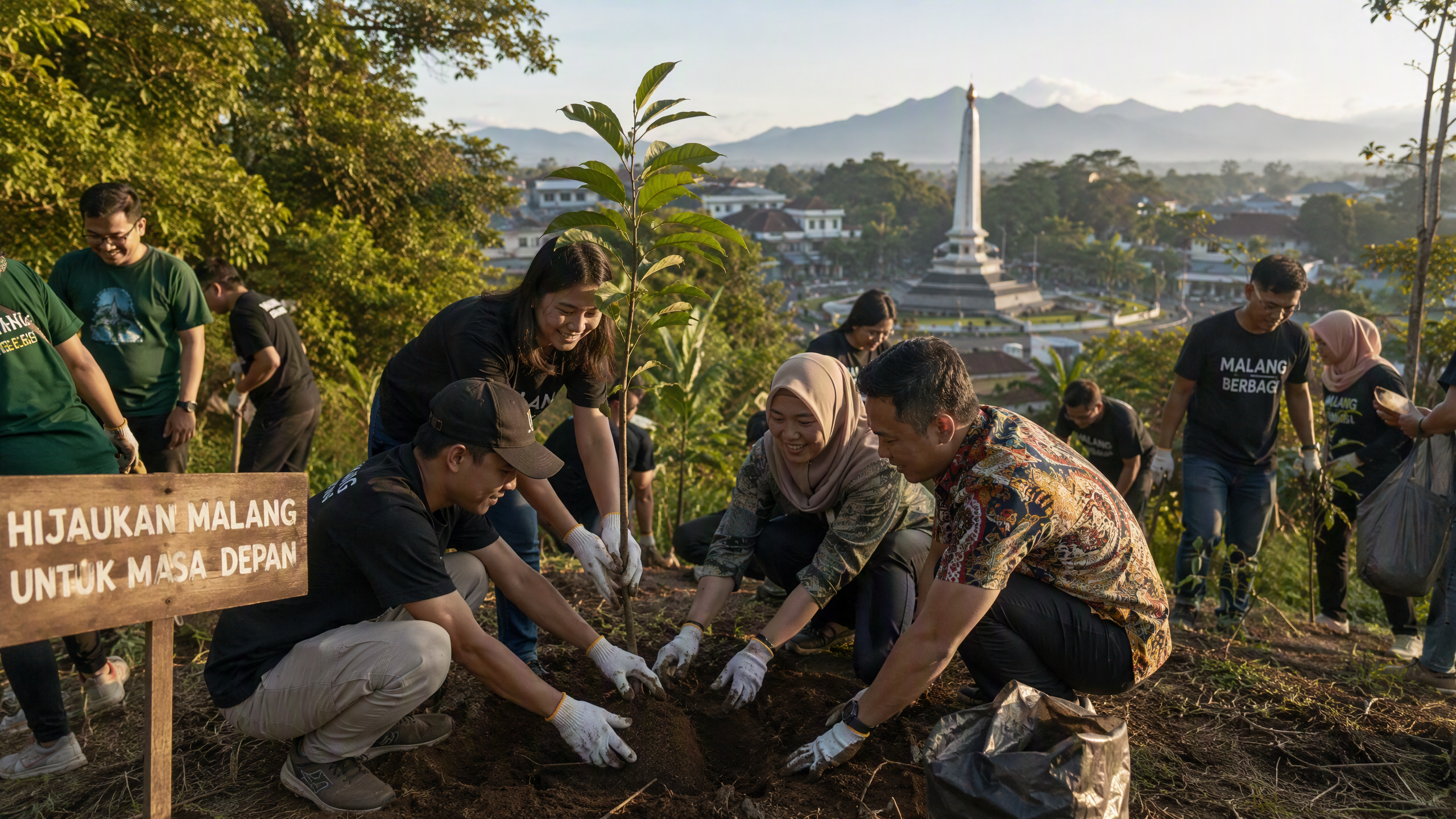
Tree planting, river and beach clean-ups, waste management and recycling education, community gardens.
Village evacuation drills, first-aid training, and emergency kit preparation, coordinated with local disaster agencies.
Schools are where lasting change begins. NCS2045 works with elementary, junior, and senior high schools — both in classrooms and in after-school activities.
Formal agreement with the school, an introduction assembly, and a schedule agreed with teachers.
Regular sessions across the school year, each planned with the class teacher.
Hand over materials, train teachers, and leave the program able to continue without us.
Donate books and set up reading corners, run weekly read-aloud sessions, and mentor student reading clubs.
After-school help in math, science, and languages, plus older-student mentoring of younger students.
Student-led recycling, school gardens, and energy-saving campaigns.
Age-appropriate sessions on using technology safely and responsibly.
Student councils, public speaking, and community-service projects designed by students themselves.
Workshops turn knowledge into skill. They are short, hands-on, and immediately useful — participants leave able to do something new.
A strong workshop follows five steps: Welcome → Show → Practice → Apply → Reflect.
Goals, agenda, ground rules
Facilitator demonstrates the skill
Participants try it with guidance
Participants use the skill in a realistic task
Group shares what they learned and will use
Financial literacy (budgeting, saving, avoiding debt), first aid, public speaking, household budgeting.
Food processing and packaging, sewing, basic digital marketing, smartphone photography for small businesses, simple repair skills.
Organizing a community event, running a meeting, conflict resolution, volunteer management.
Parenting workshops, youth employment readiness, healthy habits for families.
Culture is our identity and our gift to the next generation. NCS2045 celebrates and preserves Indonesia's diverse traditions — music, dance, crafts, games, food, and oral history.
Bring communities together in shared joy.
Document and pass on traditions at risk of being lost.
Give local artists and artisans a stage and an income.
Teach young people about their own heritage.
A village or neighborhood festival featuring local music, dance, food stalls, traditional games (e.g., balap karung, tarik tambang), and crafts.
A market for local artisans with live demonstrations of batik, weaving, pottery, and wood carving.
Inter-community traditional games and competitions for all ages, from children's races to elders' strategy games.
Teams interview elders, photograph traditional houses and tools, and record songs and stories; archives are shared with the community and local museums.
Hands-on sessions where participants learn a traditional craft from a local master.
Use this template to plan any NCS2045 activity consistently. Fill in the fields before the activity and the review section within one week after.
Shared reporting template used by all departments (Section 3)
| Audience & expected numbers | |
| Partner organizations | |
| Resources needed | |
| Budget (IDR) | |
| Volunteer roles & numbers | |
| Risk / safety notes | |
| Success indicators |
The year moves in four quarters, each with its own focus. This keeps the work balanced and builds momentum through the seasons.
Owns the annual calendar and needs assessments; coordinates across departments.
Builds and maintains school partnerships; schedules school activities.
Design and deliver workshops; maintain materials library.
Organize cultural events; maintain the heritage archive; work with local artists.
Recruit, train, and schedule volunteers; ensure safety and briefing.
Logs activities in the shared tracker, files photos and reports, and attends the monthly planning meeting.
We measure more than numbers. Each pillar tracks both activity metrics and outcomes.
Number of activities, participants, schools, volunteers, hours served.
Examples: reading scores improving; workshop participants starting small businesses; waste reduced in clean-up areas; attendance at culture events; heritage items documented.
Monthly one-page summary from each department; quarterly community report shared with partners; annual impact report to NCS2045 leadership.
Everything you need to run NCS2045 activities, ready to adapt to your scale.
NCS2045 is built on a simple belief: communities already have the strength to solve their own problems — they sometimes just need a hand to start. Our programs connect people to opportunity. Our schools plant seeds in the next generation. Our workshops put skills into hands. And our culture activities remind us all why this work matters.
Serve with heart, plan with care, and leave every community stronger than you found it.
Gotong royong. Bersama, kita bisa.
— Together, we can.
We'd love to hear from you — for questions, partnerships, or donations, reach us at:
Office 8, Jl. Senopati No. 88, Jkt 12190, Indonesia